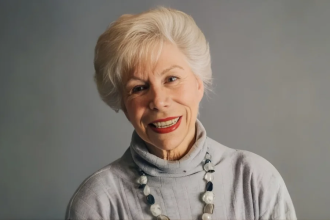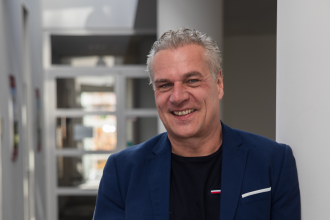

Apple’s efforts to advance in the competitive AI landscape have encountered a significant setback with the departure of Ruoming Pang, the respected head of its foundation models team, who has joined Meta. Insiders indicate that his exit is already being felt throughout Apple’s AI division.
Pang, who came on board at Apple in 2021 from Google DeepMind, played a pivotal role in developing the company’s large language models (LLMs). His leaving, alongside a number of his close colleagues, reflects a troubling trend of dissatisfaction within the ranks of Apple’s AI team.
According to The Information, the impact of Pang’s departure has created an “earthquake inside Apple.”
The significance of Pang’s departure lies in his extensive technical contributions, including the development of a crucial open-source training tool for Apple’s AI systems. His leadership saw advancements in compressing LLMs so they could function efficiently on iPhones, an essential element of Apple’s “on-device AI” strategy. Nevertheless, this progress came amid internal strife.
Reporting indicates that earlier this year, Pang’s team proposed making some of Apple’s AI models open source, a move that could have showcased their progress and fostered collaboration with external researchers. However, Apple executive Craig Federighi allegedly rejected this proposal, citing concerns that it might expose the necessary performance trade-offs made in order to run these models on iPhones. This discord is one of many indicators of the friction between Apple’s research-oriented foundation models team and its product-focused leadership.
In response to previous delays in improving Siri, Apple restructured its AI teams earlier this year. The Siri division, previously under the guidance of AI chief John Giannandrea, was reassigned to Federighi, who oversees the software division. Meanwhile, Pang’s team continued to report to Giannandrea, illustrating a growing schism between research and product development.
With Pang’s departure and the exodus of several top researchers seeking opportunities at OpenAI, Anthropic, and Meta, Apple is confronting a significant talent crisis at a critical juncture. Bloomberg has recently reported that Apple is testing external models, including those from OpenAI and Google, for Siri, a decision that has left many within the internal AI team feeling disheartened.
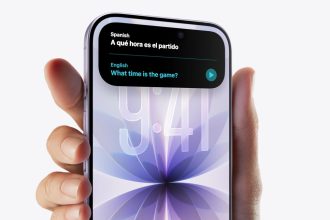
Amidst all this, Apple drew considerable attention with its Apple Intelligence announcement in June, which showcased the integration of ChatGPT into iPhones along with new writing and image-generating features. However, the company’s own foundation models remain largely undisclosed.
There is still uncertainty about whether Apple aims to compete directly with models like GPT-4 or to develop more specialized, hardware-optimized tools. In an interview with Tom’s Guide following WWDC 2025, Craig Federighi, Apple’s senior vice president of software engineering, along with Greg Joswiak, senior vice president of worldwide marketing, affirmed that Apple does not intend to create a chatbot.
Without Pang’s vision and guidance, there are concerns that Apple’s internal AI initiatives may falter or become overly dependent on external partnerships. However, there is some optimism surrounding the appointment of Zhifeng Chen, a former Google engineer, as the new head of the foundation models team, which may inject fresh energy into Apple’s AI efforts.
In any case, Apple stands at a crucial crossroads regarding its AI aspirations. As competitors like Meta, OpenAI, and Google continue to attract top talent and release highly publicized models, Apple must demonstrate that it remains a formidable player in the generative AI landscape.AI